
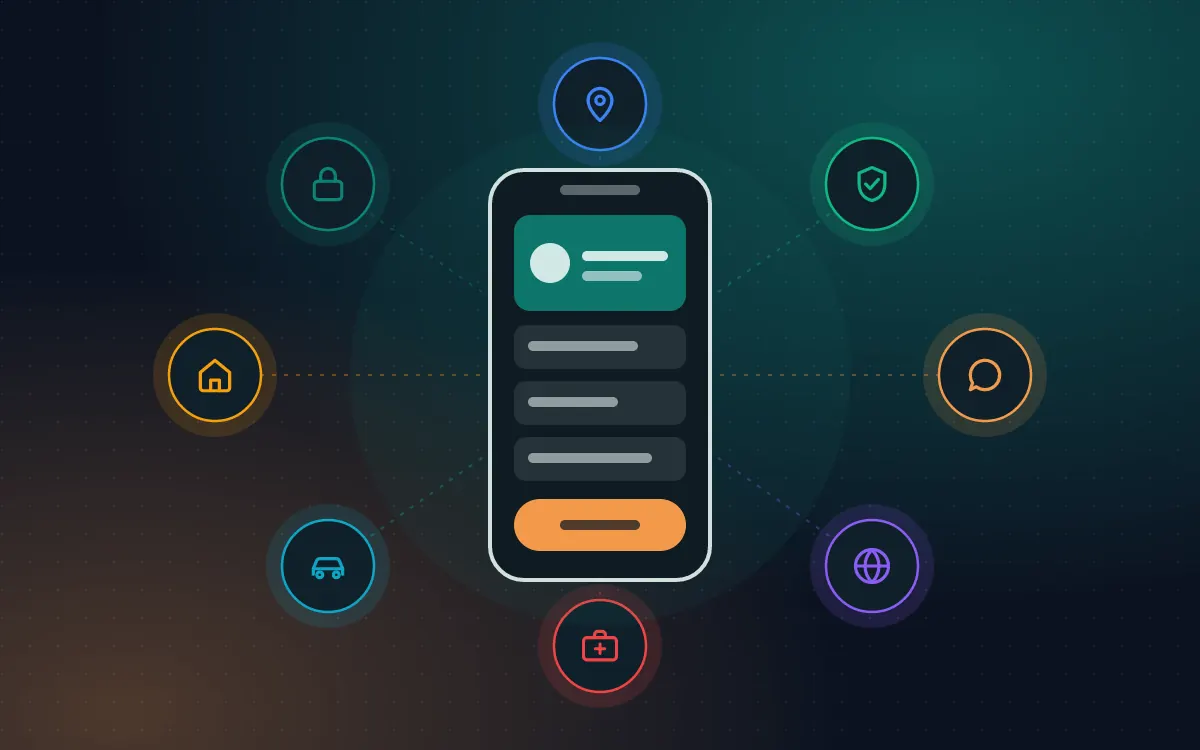
Most people use artificial intelligence dozens of times a day without opening anything they would call an AI app. The phone unlocks when it recognises a face. Spam never reaches the inbox. The map reroutes around an accident before you reach the queue.
AI makes everyday life easier by handling small tasks that depend on recognising patterns, predicting what happens next or producing a first draft: filtering scams, estimating journey times, spotting unusual card payments, captioning speech, translating text and helping doctors catch disease earlier. Most of it runs inside apps and devices people already own.
Below are 15 concrete examples, grouped by area of life, with sources for the claims that need them. After that come the downsides, because the same technology has also made some things harder.
What counts as AI in everyday life?
In daily life, AI means software that has learned patterns from a very large number of examples and uses them to do one of three things:
- Recognise something: a face, a voice, a spam email, a fraudulent payment, a word spoken in a noisy room.
- Predict something: traffic in twenty minutes, tomorrow's rain, the next word you are about to type.
- Generate something: a translation, a caption, a summary, a first draft of a letter.
Every example below is one of those three, applied to a job people used to do slowly, badly or not at all.
15 examples of AI in everyday life
- Recommendations for what to watch, listen to, read or buy next.
- Photo search and face unlock on your phone.
- Voice assistants that set timers, reminders and lights by voice.
- Smart thermostats that learn when you are home.
- Predictive text and voice typing.
- AI chat assistants for planning, questions and paperwork.
- Navigation apps that predict traffic and arrival times.
- Automatic emergency braking and other driver-assistance features.
- Weather forecasts and early warnings.
- Spam, phishing and scam-call filtering.
- Fraud alerts and spending insights from your bank.
- Screening tools that help doctors spot disease.
- Wearables that flag an irregular heart rhythm or a hard fall.
- Live captions and image descriptions for people with disabilities.
- Instant translation of text, signs and conversations.
Everyday life before and with AI
| Everyday task | Before | With AI |
|---|---|---|
| Getting somewhere | Paper maps and guessing at traffic. | Routes that change around jams, with an arrival time that is usually right. |
| Sorting junk and obvious scams by hand every morning. | Most spam and many phishing emails filtered before you see them. | |
| Choosing what to watch or buy | Browsing shelves or asking friends. | Suggestions based on what you and similar people chose before. |
| Reading another language | A phrasebook, or a friend who spoke it. | Point a camera at a sign or menu and read it in your own language. |
| Finding an old photo | Scrolling back through years of pictures. | Searching "beach", "birthday cake" or a person's face. |
| Protecting your money | Noticing fraud on a statement weeks later. | Unusual payments flagged or blocked while they are happening. |
| Following a video or call | Relying on hearing, or waiting for subtitles. | Automatic captions on phones, video calls and online videos. |
AI at home and on your phone
Recommendations that narrow the choice
Streaming services, music apps and online shops compare what you have watched, played or bought with the choices of millions of other people, then suggest what you are likely to want next. The benefit is less time spent searching. The cost is that you mostly see more of what you already like, so it is worth browsing outside the suggestions now and then.
Cameras, photo search and face unlock
A modern phone camera takes several frames in a fraction of a second and uses AI to combine them, brightening a dark room and keeping faces sharp despite a shaky hand. Afterwards, the same technology lets you search your gallery by what is in the picture instead of scrolling back through years of photos. Face unlock works on the same principle: the phone has learned what your face looks like from different angles and in different light.
Voice assistants and smart thermostats
Setting a timer with flour on your hands, adding milk to a shopping list from the kitchen, switching off the lights from bed. Voice assistants are imperfect, but for small tasks they remove just enough effort to be useful. For older people and anyone with limited mobility, controlling calls, lights and reminders by voice can mean living more independently.
Learning thermostats apply the same idea to heating and cooling. They notice when the house is usually empty and adjust automatically, so you are not paying to heat or cool rooms nobody is in.
Predictive text and voice typing
Autocorrect, next-word suggestions and voice typing are so ordinary that few people think of them as AI any more. Voice typing in particular has made writing on a phone practical for people who find small keyboards difficult.
AI chat assistants
Assistants such as ChatGPT, Gemini, Microsoft Copilot and Claude answer questions in plain language and produce first drafts. Everyday uses that save real time:
- Explaining a confusing letter from a bank, insurer or government office in plain words.
- Comparing two phone or insurance plans you paste in, point by point.
- Turning a list of places into a day-by-day travel plan.
- Drafting a complaint, an application or a difficult email, which you then check and make your own.
They can state wrong facts confidently, so check anything that matters before you act on it. Many companies also use similar technology in customer-service chat, which is why you can often track an order or change a booking at midnight without waiting for a person. If you want to use these tools at work, our guide to practical AI for daily professional tasks has example prompts you can copy.
Getting around safely
Navigation that sees the traffic first
Map apps combine live location data from many phones with years of traffic history to predict how long a journey will take and which route is quickest right now. For commuters, delivery drivers and taxi drivers, a warning to take a different road before reaching a queue adds up to hours every month.
Automatic emergency braking
Many newer cars use cameras and sensors to spot a vehicle, pedestrian or cyclist ahead and brake if the driver does not react in time. Research by the Insurance Institute for Highway Safety found that automatic emergency braking cut police-reported rear-end crashes by 50 percent. Lane-keeping warnings work alongside it. None of these features replace the driver; they are designed to catch the moment of distraction everyone has eventually.
Weather forecasts and early warnings
Weather forecasting has always relied on computers, and machine learning is now part of the everyday forecast. The European Centre for Medium-Range Weather Forecasts put its AI forecasting system into daily operation in February 2025, running alongside its traditional physics-based model. Better forecasts mean earlier warnings about storms, floods and heatwaves, and more time for people to prepare.
Money and security
Spam, phishing and scam-call filtering
Email spam filters were one of the first mass uses of machine learning and remain one of the most valuable. They learn continuously from the messages millions of people mark as junk. Many phones now apply the same approach to calls and texts, labelling likely scam calls before you answer.
Fraud alerts and spending insights
Banks check card and digital payments against the pattern of how you normally spend. A purchase in another country an hour after you bought coffee at home, or a sudden run of large transactions, can be held until you confirm it by text or in the app. Most people only notice this when it occasionally stops a legitimate payment. Many banking apps also sort your spending into categories automatically, which makes it far easier to see where the money goes each month.
Health
Health is where AI's benefits are most promising and where caution matters most. Everything below supports medical care; none of it replaces a qualified professional.
Screening support for doctors
In 2018 the US Food and Drug Administration authorised IDx-DR, the first AI system allowed to detect diabetic eye disease without a specialist reading the images. That means a patient can be screened during a routine visit to their family doctor instead of waiting for an eye specialist. Other tools help radiologists decide which scans to review first. The doctor still makes the diagnosis; the software helps them find the cases that need attention sooner.
Wearables that notice changes
Some smartwatches and fitness trackers can flag signs of an irregular heart rhythm or detect a hard fall and offer to call for help. The value is in the prompt: a nudge to see a doctor about something the wearer might not have noticed.
Help with appointments and paperwork
AI assistants can explain medical terms in plain language and help people prepare questions before an appointment, so a short consultation is used well. In clinics, automated booking, reminders and note transcription free up staff time for patients.
How does AI help people with disabilities?
For many people with disabilities, ordinary AI features have removed barriers that existed for generations. This is where the everyday benefit is easiest to see.
Live captions
Phones, video-call apps and video platforms can now turn speech into text in real time. Android's Live Caption, for example, captions almost any audio playing on the phone. For people who are deaf or hard of hearing, that opens up calls, videos and meetings that used to be difficult or impossible to follow.
Describing the world
Apps such as Microsoft's Seeing AI and Be My Eyes let people who are blind or have low vision point a phone camera at a letter, a product label or a room and hear what is in front of them.
Voice control and reading support
Voice control lets people with limited hand movement write messages, search the web and operate their devices. Text-to-speech and plain-language summaries help people with dyslexia and other reading difficulties get through long documents.
Translation
Real-time translation of text, speech and signs helps travellers, migrants and families who speak different languages understand each other at the doctor, at school or at home.
The same thinking applies to websites: accessible website design that works with screen readers and captions is a site more people can use, not just a legal requirement.
Learning, admin and small business
- Learning at your own pace. A patient explanation of a maths problem or a new piece of software, repeated as many times as needed, at the level you need.
- Paperwork. A first draft of a cover letter or a formal complaint, which you then check and correct.
- Long documents. A summary of terms and conditions or a report, with the parts that affect you pointed out.
- Small businesses doing more with fewer people. Owners can automate routine customer questions and admin that used to need an extra member of staff.
How I use AI myself
The use I rely on most is at home. Before my kids' exams, I give an AI assistant the chapters and topics they are studying and the level they are at, and ask for a set of mixed practice questions with an answer key. I turn that into a PDF they can work through on paper. The part that matters is what happens before printing: I check every answer against their textbook, because now and then one is simply wrong, stated with complete confidence. Five minutes of checking is still far quicker than writing a question paper from scratch.
At work, I build websites and web apps, and AI speeds up the first drafts of layouts and code and lets me try an idea quickly before committing to it. Every page is still designed, reviewed and tested by hand on real phones before a client sees it. More on how I work is on the web development page.
The pattern is the same in both places: the AI produces the draft, and a person decides what is right.
What are the disadvantages of AI in daily life?
The same technology creates new problems, and a fair picture has to include them.
- More convincing scams. The US Federal Trade Commission has warned that scammers use AI to clone a family member's voice from short clips posted online, then call asking for money in a fake emergency. Phishing emails no longer give themselves away with spelling mistakes.
- Misinformation. Fake images and confident but wrong answers spread quickly, and checking what is true takes more effort.
- Privacy. Many AI features depend on data about where you go, what you buy and how you speak. Convenience is often traded for privacy without people noticing.
- Over-reliance. Skills that are never practised fade, whether that is finding your way, spelling or checking a calculation.
- Bias and mistakes. AI learns from past data, so it can repeat unfairness in that data or work less well for some groups of people than for others.
- Changes to work. Some tasks and roles are changing quickly, and the gains and losses are not shared evenly.
How to get the benefits without the downsides
- Switch on the protections you already have. Spam-call filtering, fraud alerts from your bank and two-factor authentication are often off by default. Reused passwords and missing two-factor authentication are also how many small business websites get hacked.
- Verify urgent calls. If a relative calls asking for money in an emergency, hang up and call them back on the number you already have, as the FTC advises. Many families also agree a code word that only they know.
- Check before you act. Treat AI answers about health, money and law as a starting point, and confirm anything important with a reliable source or a qualified person.
- Review your privacy settings. Look at what location, voice and activity history your phone and apps keep, and turn off what you do not need.
- Keep practising the basics. Use the map, but know roughly where you are going. Use the draft, but read it before you send it.
Frequently asked questions
AI has taken over many small, repetitive tasks: routing around traffic, filtering spam and scam calls, flagging fraudulent payments, suggesting what to watch, translating text, captioning speech and helping doctors screen for disease. It has also made phones and computers far more usable for people with disabilities.
Common examples include face unlock and photo search on phones, streaming and shopping recommendations, voice assistants, predictive text, navigation apps, automatic emergency braking in cars, weather forecasts, spam filters, bank fraud alerts, smartwatch health alerts, live captions and translation apps.
Both, depending on how it is used. It brings clear benefits in safety, health, accessibility and convenience, and it also enables more convincing scams, misinformation, privacy problems and biased decisions. The outcome depends on sensible rules, responsible companies and informed users.
Usually not. Most everyday AI, such as spam filtering, navigation, photo search, live captions and fraud alerts, is built into phones, apps and bank accounts at no extra cost. AI chat assistants have free versions, with paid plans for heavier use.
Be suspicious of any urgent request for money, even in a familiar voice. Hang up and call the person back on a number you already have, agree a family code word, never share one-time passwords, and turn on your bank's fraud alerts and two-factor authentication.
Three things worth doing this week
Most of the benefits above arrive automatically. A few depend on a setting or a habit:
- Turn on scam-call filtering, your bank's fraud alerts and two-factor authentication on your main accounts.
- Agree a code word with your family for emergency calls.
- Try live captions or camera translation once, so you know where they are when you need them.

